
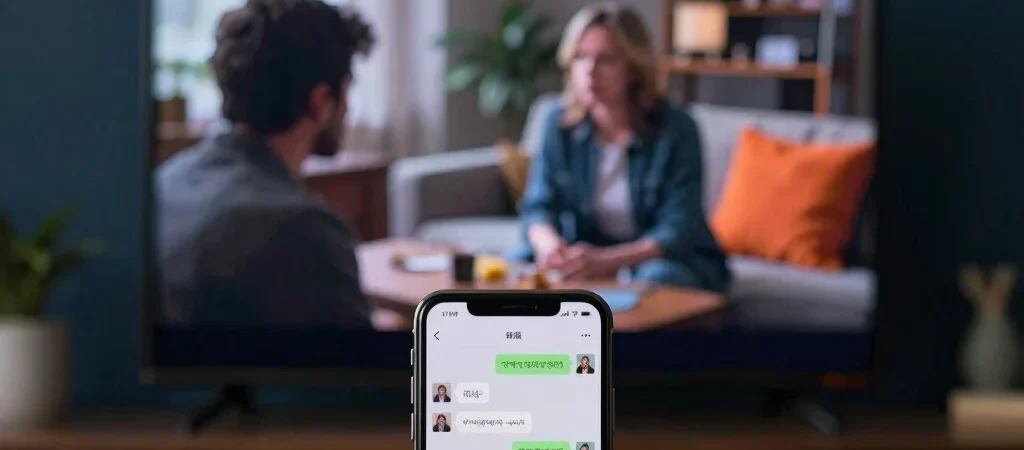
The credits roll, but your phone is already lighting up: a screenshot, a theory, three different readings of the final scene. Watching television now often means moving between the episode and the conversation around it. That exchange can make a show feel bigger, as long as it doesn’t crowd out the story itself.
A second screen, not the whole show
A group chat can catch the details you missed: a line that lands differently after the reveal, a background clue, or the moment a character finally makes a choice. But the fastest reaction isn’t always the most thoughtful one. Letting an episode breathe before opening the feed can leave room for your own first impression.
Spoilers travel at different speeds
A premiere night means something different to someone watching live than to someone catching up over the weekend. A vague post can still give away a twist if it points attention in the wrong direction. When you’re sharing a reaction, name the episode or season and keep major reveals out of the preview.
Keep your own reading in view
Online consensus can make one interpretation feel inevitable, even when the episode leaves room for several. Notice what people are responding to, then return to the scene: the performance, the edit, the awkward pause before the answer. The chat is part of the viewing experience, but it doesn’t get the final word.